
Lawn Compaction Test: Try the Screwdriver Method
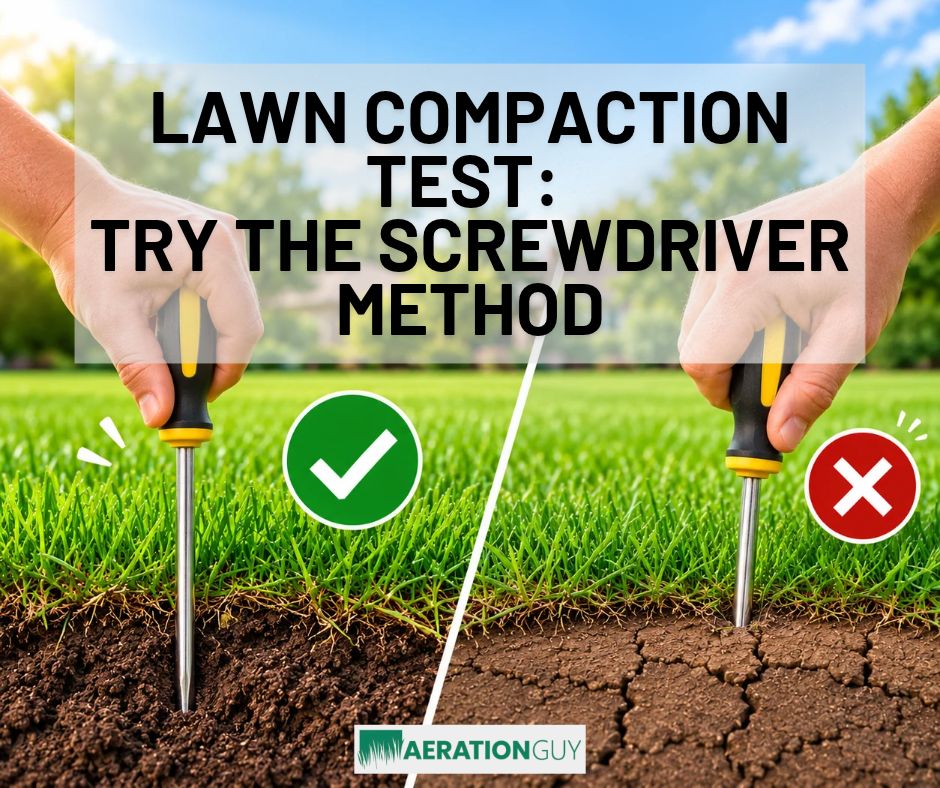
Does your lawn feel unusually hard when you walk across it? Before assuming your grass needs another treatment, try a simple lawn compaction test using an ordinary screwdriver. This quick check can help Indianapolis homeowners identify areas where dense soil may be restricting root growth and water movement.
Central Indiana lawns often contain clay-rich soil that becomes firm during dry weather. But hard ground doesn’t always mean severe compaction. At Aeration Guy, we believe understanding what’s happening beneath your grass is the first step toward choosing the right solution.
What Is a Lawn Compaction Test?
The screwdriver test is a simple way to check how much resistance the soil creates when something is pushed into it.
All you need is a long screwdriver with a sturdy handle.
When soil has adequate moisture and a favorable structure, the screwdriver should generally penetrate more easily. When the ground is dense, dry, or compacted, you may encounter considerable resistance.
However, this test is only a screening method. It cannot measure the exact degree of compaction or distinguish every cause of soil resistance.
Why Soil Resistance Matters
Grass roots need space to grow.
Healthy soil contains pores that allow air and water to move through the ground. Repeated pressure from foot traffic, lawn equipment, and construction activity can reduce those spaces.
As soil becomes denser, roots may struggle to grow deeply.
The screwdriver test helps identify locations worth examining more closely.
How to Perform a Lawn Compaction Test Using a Screwdriver
You don’t need specialized equipment to complete this basic check.
Follow these steps:
Choose a suitable day. Test when the soil is moist but not saturated. Extremely dry clay can produce misleading results.
Select several locations. Include healthy turf, thin areas, and frequently traveled sections of the yard.
Use a sturdy screwdriver. Choose one with a shaft approximately 6 inches long or longer.
Push straight down. Apply steady hand pressure without forcing the screwdriver.
Compare the resistance. Notice whether some areas are considerably harder to penetrate than others.
Record your observations. Pay attention to where resistance occurs and how deeply the screwdriver enters.
Avoid testing near buried utilities, irrigation lines, invisible pet fences, or other underground installations.
The goal isn’t to force the screwdriver as deeply as possible. It’s to compare how the soil responds across your lawn.
How to Interpret Your Lawn Compaction Test Results
Different levels of resistance can provide useful clues.
When the Screwdriver Slides In Easily
If the screwdriver enters moist soil with relatively little resistance, the tested area may not have significant near-surface compaction.
However, easy penetration doesn’t guarantee ideal soil conditions throughout the entire root zone.
The Screwdriver Stops After a Few Inches
Strong resistance may indicate compacted soil, naturally dense clay, rocks, buried debris, or a drier layer beneath the surface.
Try the test in several nearby locations before drawing conclusions.
If the same resistance occurs repeatedly, further evaluation may be worthwhile.
Why Some Lawn Areas Are Harder Than Others
Uneven results are common.
A backyard pathway may experience more pressure than an open lawn area. Similarly, soil near driveways, gates, and patios may be denser because of repeated traffic or construction activity.
These differences can help identify areas that deserve closer attention.
How Indiana Clay Soil Affects Compaction Testing
Central Indiana soil doesn’t behave the same way throughout the year.
Clay-rich soil can become extremely firm during dry periods and softer when moisture returns.
That means a screwdriver may barely penetrate the ground during a dry August afternoon but enter much more easily after rainfall.
This doesn’t necessarily mean the compaction disappeared.
Moisture changes how the soil responds to pressure, which is why testing under comparable conditions matters.
For a more useful assessment, compare several areas of the lawn when soil moisture is reasonably consistent.
Other Signs of Lawn Soil Compaction
The screwdriver test becomes more useful when combined with visible lawn conditions.
Look for these additional warning signs:
Thin grass: Roots may struggle to establish in dense soil.
Standing water: Compaction can slow water infiltration.
Bare pathways: Repeated foot traffic may compress the ground.
Shallow roots: Dense layers can restrict downward root growth.
Uneven growth: Some sections may struggle despite receiving similar care.
These symptoms don’t automatically confirm compaction. Poor drainage, shade, drought, and other conditions can produce similar problems.
However, several warning signs appearing together may justify a closer look at the soil.
When Should You Consider Core Aeration?
If your lawn consistently shows strong soil resistance and other signs of compaction, core aeration may help.
A professional core aerator uses hollow tines to remove small cylinders of soil, creating openings in the compacted root zone.
According to Purdue University Extension, effective core aeration generally targets a depth of approximately 2 to 3 inches, with adequate hole coverage across the treated area.
For Indianapolis lawns with compacted clay-rich soil, this process can improve air and water movement and create better conditions for root development.
However, aeration isn’t a guaranteed solution for every hard or poorly draining lawn.
Deep construction-related compaction, buried debris, and grading problems may require additional attention.
Why Soil Moisture Matters
The same moisture conditions that influence the screwdriver test also affect aeration quality.
Extremely dry soil can prevent aerator tines from reaching their intended depth. Saturated ground may smear or become damaged under heavy equipment.
For Central Indiana’s cool-season lawns, spring and fall are generally suitable aeration periods when grass is actively growing and soil conditions are favorable.
Get Professional Core Aeration in Indianapolis
A simple lawn compaction test can reveal useful differences in soil resistance across your property. Although it won’t provide a complete soil diagnosis, it can help identify areas where compaction deserves further investigation.
At Aeration Guy, we specialize in professional core aeration for homeowners throughout Indianapolis, Carmel, Fishers, Noblesville, Westfield, and surrounding Central Indiana communities.
Our focus is helping homeowners understand the condition of their soil and whether core aeration is the right approach.
Does your screwdriver keep hitting hard ground? Contact Aeration Guy to learn more about professional core aeration and give your lawn room to breathe.