
Best Soil Conditions for Aeration: Wet vs. Dry
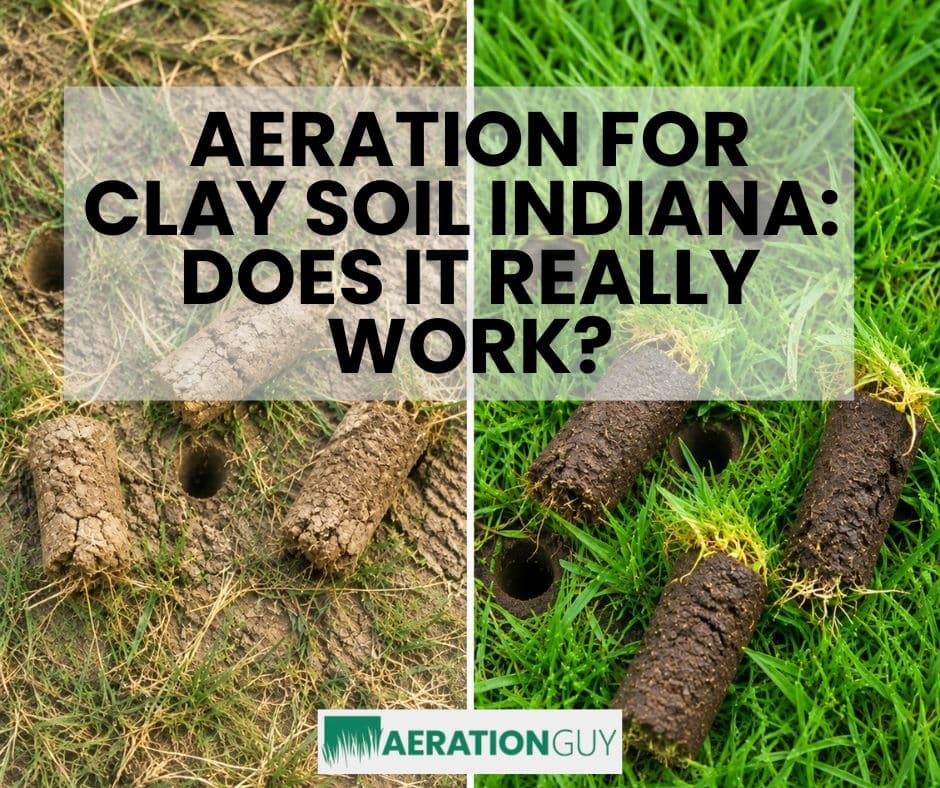
Are you wondering whether your lawn should be wet or dry before aeration? The best soil conditions for aeration are when the ground is moist but not saturated. Slightly damp soil allows the aerator’s hollow tines to penetrate effectively and remove well-formed soil plugs without creating excessive surface damage.
For homeowners in Indianapolis and Central Indiana, getting that moisture balance right can be challenging. Clay-heavy soil, unpredictable rainfall, and changing temperatures all affect how the ground responds to aeration equipment.
At Aeration Guy, we understand that successful core aeration depends on more than choosing the right day. The condition of the soil beneath your grass plays a major role in the quality of the treatment.
What Are the Best Soil Conditions for Aeration?
Core aeration works by removing small cylinders of soil, creating openings that help air and water move into the root zone.
For the best results, the soil should contain enough moisture to allow the aerator’s tines to penetrate without excessive resistance.
However, it shouldn’t be so wet that the ground becomes muddy or unstable.
Ideally, the soil should:
Feel slightly damp beneath the surface.
Allow a screwdriver to penetrate without excessive force.
Hold together enough to form recognizable soil plugs.
Support aeration equipment without leaving deep ruts.
Break apart naturally rather than smear excessively.
These conditions help the equipment create consistent holes while minimizing unnecessary turf disturbance.
Why Wet Soil Conditions Can Affect Aeration
It might seem logical that softer, wetter ground would make aeration easier. However, too much moisture can create additional problems.
How Saturated Soil Impacts Core Aeration
When clay-rich soil becomes excessively wet, it can behave like modeling clay.
As hollow tines enter and leave the ground, the surrounding soil may smear along the sides of the holes.
This can reduce the effectiveness of the openings and interfere with water movement.
Additionally, operating heavy equipment on saturated ground may create ruts or contribute to further compaction.
For Indianapolis homeowners dealing with poorly drained yards, waiting until the soil becomes workable is often the better approach.
Why Dry Soil Makes Lawn Aeration Difficult
Extremely dry ground creates a different challenge.
During extended dry periods, clay-heavy soil can become remarkably hard. This makes it difficult for aerator tines to penetrate to their intended depth.
As a result, dry soil may produce:
Shorter or incomplete soil plugs
Shallow aeration holes
Uneven penetration across the lawn
Increased resistance against the equipment
Less effective coverage of compacted areas
A machine may still create visible holes, but those openings might not reach deeply enough to provide the intended compaction relief.
Why Indiana Clay Soil Needs Special Attention
Central Indiana lawns often contain clay-rich soil that responds noticeably to changes in moisture.
When wet, clay becomes sticky and vulnerable to compaction. When dry, it can become extremely firm.
This makes moisture management particularly important for professional core aeration.
The goal isn’t to make the ground as soft as possible. It’s to create conditions where the aerator can remove soil cleanly and consistently.
How to Check Soil Moisture Before Aeration
You don’t need specialized equipment to get a general idea of whether your lawn is ready.
A few simple observations can help.
Try the screwdriver test. Push a screwdriver several inches into the ground. If the soil is extremely difficult to penetrate, it may be too dry or compacted. If the ground is muddy and offers almost no resistance, it may be excessively wet.
Inspect the soil beneath the surface. Dig a small sample from the upper few inches. Ideally, the soil should feel damp without releasing free water when squeezed.
Walk across the lawn. If your shoes sink into the ground or leave muddy impressions, the soil may need additional drying time.
These checks aren’t substitutes for a professional assessment, but they can help homeowners recognize unfavorable conditions.
Should You Water Before Core Aeration?
If your lawn is unusually dry, watering beforehand may improve aerator penetration.
For many lawns, light to moderate watering a day or two before the appointment can help, depending on existing moisture levels and weather conditions.
However, the amount of water needed varies with soil type, drainage, and recent rainfall.
Avoid soaking the lawn immediately before service.
The objective is to moisten the root zone, not create standing water.
If your soil already feels appropriately damp, additional watering may be unnecessary.
Why Timing Matters in Indianapolis
Central Indiana weather can change quickly, particularly during spring and fall.
A stretch of dry weather may leave the ground hard, while several consecutive rainy days can create saturated conditions.
For cool-season lawns, spring and fall are generally favorable aeration periods because grass is actively growing.
However, the calendar alone doesn’t guarantee suitable soil conditions.
A lawn scheduled for aeration in October may be too wet following heavy rainfall. Another property may be too dry after several weeks without meaningful precipitation.
That’s why evaluating the ground on the day of service matters.
Can Poor Soil Conditions Affect Aeration Depth?
Yes. Soil moisture directly influences how effectively aerator tines enter the ground.
For established turf, Purdue University Extension generally recommends aeration holes approximately 2 to 3 inches deep, with sufficient hole density to provide meaningful coverage.
Extremely dry soil can limit penetration. Meanwhile, excessively wet soil may allow deeper entry but increase smearing and surface disturbance.
The best aeration results come from balancing penetration, hole density, and soil conditions.
Simply making deeper holes doesn’t guarantee a better treatment.
What If Your Lawn Is Too Wet or Too Dry?
Sometimes postponing aeration is the most practical decision.
If the ground is saturated, allowing it to dry can help prevent unnecessary damage.
If the soil is extremely dry, watering ahead of a rescheduled appointment may improve conditions.
Trying to force an aeration treatment under unfavorable conditions can reduce its effectiveness.
For homeowners with heavily compacted or poorly drained areas, additional evaluation may also be necessary to determine whether aeration alone can address the problem.
Get Better Results With Aeration Guy
The best soil conditions for aeration aren’t soaking wet or completely dry. They’re comfortably moist, allowing the equipment to remove soil plugs while minimizing surface damage.
For Indianapolis and Central Indiana homeowners, understanding this balance is especially important when dealing with dense clay soil.
At Aeration Guy, we specialize in professional core aeration and understand how soil moisture affects penetration, coverage, and overall treatment quality.
Whether your lawn is compacted, difficult to penetrate, or struggling with dense soil, we’re here to help you understand when core aeration makes sense.
Ready to give your lawn room to breathe? Contact Aeration Guy to learn more about professional core aeration in Indianapolis, Carmel, Fishers, Noblesville, Westfield, and surrounding Central Indiana communities.