
How Long Aeration Plugs Last on Your Lawn
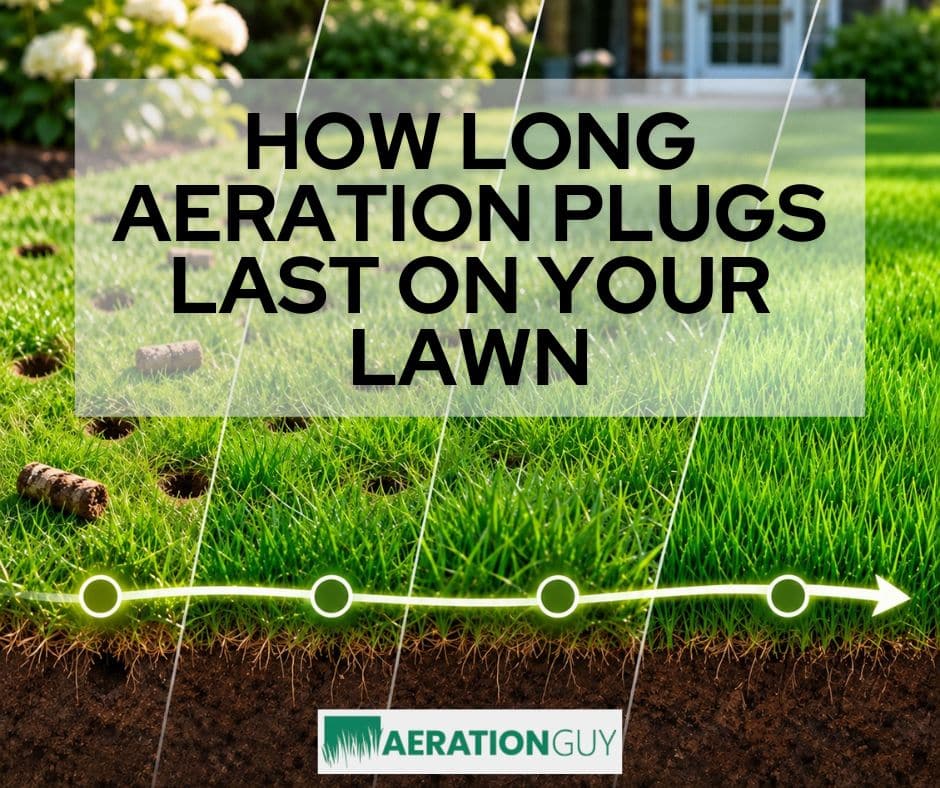
Wondering how long aeration plugs last after a professional core aeration service? Most soil plugs naturally break down within one to three weeks, although dry weather, clay-heavy soil, and limited rainfall can make them last longer. For homeowners in Indianapolis and Central Indiana, these small dirt cylinders are a normal part of the aeration process and generally should be left on the lawn.
At Aeration Guy, we often explain that those scattered soil plugs aren’t leftover debris. They’re evidence that the aerator physically removed soil to create openings beneath your grass.
How Long Aeration Plugs Last After Treatment
After core aeration, your lawn may look like someone scattered hundreds of small dirt cylinders across the grass.
These plugs typically measure around two to three inches long when extracted intact, although their actual size depends on equipment, soil moisture, and ground conditions.
Over time, several natural processes help break them down:
Rainfall: Moisture softens the extracted soil.
Irrigation: Water helps loosen compacted plugs.
Mowing: Normal mowing activity can gradually crumble dry cores.
Weathering: Temperature changes and natural exposure help break the plugs apart.
In favorable conditions, plugs may become less noticeable within several days. However, some can remain visible for several weeks.
Why Some Aeration Plugs Take Longer to Break Down
Not every lawn breaks down extracted soil at the same rate.
Several factors influence how quickly the plugs return to the ground.
Dense Clay Holds Its Shape
Central Indiana has many lawns with clay-rich soil.
Clay contains extremely fine particles that can stick together when moist and become firm when dry.
As a result, plugs extracted from clay-heavy areas may remain intact longer than those from loose, sandy soil.
This doesn’t necessarily indicate a problem with the aeration service.
Dry Weather Slows the Process
Indianapolis weather can shift quickly between rainy and dry periods.
When rainfall is limited, soil plugs may become hard and remain visible longer.
However, there’s no need to soak your lawn simply to make the plugs disappear. Normal watering practices and natural rainfall are generally sufficient.
Plug Size Makes a Difference
Longer, thicker plugs may take more time to break down than smaller or already fragmented cores.
Soil texture and moisture also affect how firmly each plug holds together.
A plug that breaks apart immediately isn’t necessarily better or worse than one that remains intact for several days.
Should You Remove Aeration Plugs From Your Lawn?
No. In most situations, it’s better to leave them where they fall.
Those plugs contain soil that belongs in your lawn. As they break down, the material returns to the turf surface.
Removing them creates unnecessary cleanup work and takes soil away from your yard.
Although the temporary appearance may seem messy, leaving the cores is a normal part of professional lawn aeration.
Can You Rake the Plugs to Make Them Disappear Faster?
Lightly breaking apart dry plugs is generally possible, but aggressive raking isn’t recommended.
Freshly aerated turf may be sensitive to unnecessary disturbance, especially if overseeding was also performed.
If appearance is a concern, allowing rainfall and normal mowing to gradually disperse the plugs is usually the simplest option.
Do Aeration Holes Close When the Plugs Break Down?
Not necessarily.
The disappearance of soil plugs and the closing of aeration holes are two separate processes.
Soil plugs break apart on the lawn surface. Meanwhile, aeration holes gradually narrow as surrounding soil settles and natural soil processes continue.
The openings may become less visible before every plug has disappeared.
Likewise, plugs can remain on the surface even after the holes are difficult to see.
The benefits of core aeration aren’t determined by how long the holes remain visible.
What If the Plugs Are Still There After a Month?
If you still notice soil plugs after several weeks, there’s usually no reason to worry.
Dry conditions and dense clay can slow their breakdown.
Instead of focusing only on the appearance of the plugs, consider the overall condition of your lawn.
Are the plugs gradually crumbling? Is the turf recovering normally? Has rainfall been limited?
If the soil remains extremely hard or the lawn continues showing signs of poor infiltration, those issues may deserve closer evaluation. However, persistent plugs alone don’t prove that the treatment was unsuccessful.
What Makes Core Aeration Different?
One reason soil plugs matter is that they distinguish core aeration from spike aeration.
Spike aerators push into the ground without removing soil. Core aerators physically extract small columns of soil, creating openings that can relieve compaction in the treated layer.
For clay-heavy Indianapolis lawns, removing soil rather than simply displacing it can be particularly useful.
Proper hole depth, coverage, and soil moisture are also important for effective results.
Let Aeration Guy Handle What Happens Below the Surface
So, how long aeration plugs last depends on soil texture, weather, and moisture. Most break down within one to three weeks, although some remain visible longer.
The important thing to remember is that you usually don’t need to remove them. Letting the plugs naturally return to the lawn is part of the core aeration process.
At Aeration Guy, we specialize in professional core aeration for homeowners throughout Indianapolis, Carmel, Fishers, Noblesville, Westfield, and surrounding Central Indiana communities.
We focus on relieving soil compaction and creating better growing conditions beneath your grass.
Ready to give your lawn room to breathe? Contact Aeration Guy to learn more about professional core aeration and schedule your service.