
Lawn Aeration Depth: How Deep Should Holes Be?
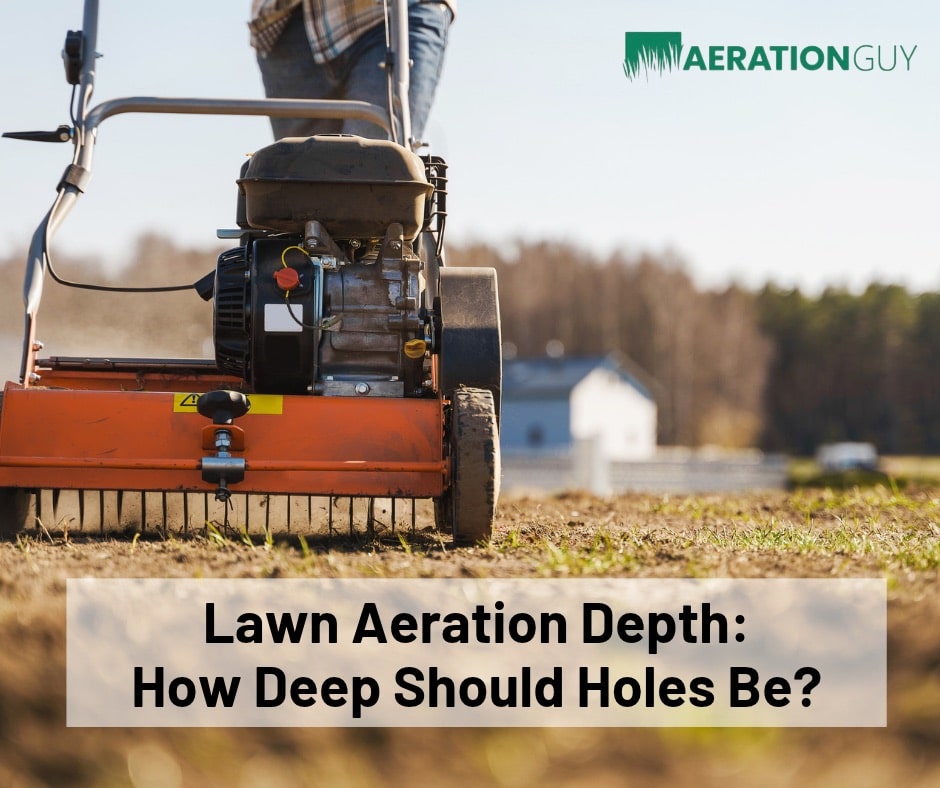
How deep should lawn aeration holes actually be? A good lawn aeration depth is generally around 2 to 3 inches for established turf. That depth allows core aeration to reach into the root zone and relieve compacted soil instead of simply disturbing the surface. For Indianapolis and Central Indiana lawns, proper penetration can be especially important where dense or clay-heavy soil makes it difficult for air and water to move through the ground.
At Aeration Guy, we pay attention to more than whether an aerator made holes. The depth, spacing, soil conditions, and quality of the extracted cores all matter.
What Is the Recommended Lawn Aeration Depth?
For established lawns, core aeration should typically penetrate about 2 to 3 inches into the soil.
Why does that depth matter?
Compaction is not always limited to the immediate surface. Grass roots extend below the visible turf, so shallow holes may not provide enough relief where the root zone is dense.
Proper core aeration physically removes columns of soil. That creates temporary openings where air and water can move into the ground.
Is Deeper Lawn Aeration Always Better?
Not necessarily.
It might seem logical that a four-inch hole must be better than a two-inch hole. However, effective aeration is not a competition to create the deepest possible holes.
The goal is to relieve compaction throughout the active root zone without unnecessarily disturbing the lawn.
Depth is also only one measure of a quality aeration job. Hole density matters too.
A lawn with a few deep holes may receive less effective coverage than one with many properly spaced cores reaching the recommended depth.
Why Are Some Aeration Holes Shallower Than Others?
Have you ever looked across a freshly aerated lawn and noticed that some soil plugs are longer than others?
That is normal.
Several conditions can influence lawn aeration depth.
Soil Moisture Affects Core Aeration Depth
Moist soil generally allows aerator tines to penetrate more effectively.
However, there is an important difference between moist and saturated.
Bone-dry clay soil can become extremely hard. Aerator tines may struggle to reach their intended depth. On the other hand, excessively wet soil can smear or deform as the tines enter and leave the ground.
For this reason, soil conditions on aeration day matter.
Compacted Clay Can Limit Aeration Hole Depth
Central Indiana soils often contain significant amounts of clay.
Clay particles are extremely small. When those particles are compressed, pore spaces can decrease and the soil can become dense.
A heavily compacted section of lawn may resist tine penetration more than another section of the same property.
That means you might see shorter plugs near a driveway, gate, play area, or frequently traveled backyard path.
Equipment Can Influence Lawn Aeration Depth
Not every machine produces identical results.
Aerator weight, tine design, machine condition, and operating technique can affect penetration. Ground speed and the number of passes also influence how thoroughly an area is aerated.
This is one reason professional core aeration should be evaluated by more than whether holes are visible afterward.
Can You Measure Lawn Aeration Depth From the Soil Plugs?
Soil plugs are one of the easiest ways to inspect what happened during aeration.
Pick up several plugs from different areas of the yard and compare them.
If many intact plugs are around two to three inches long, that can indicate the aerator achieved good penetration in those locations.
However, don’t treat every short plug as evidence of poor aeration.
A three-inch core can break after it reaches the surface. Dry or crumbly soil may also fall apart quickly. Plug length therefore provides useful information, but it does not always equal the exact depth of the hole.
Lawn Aeration Depth Isn’t the Only Number That Matters
Imagine aerating a 1,000-square-foot lawn and making only ten holes.
Those holes could be three inches deep, but they obviously wouldn’t relieve much compaction.
That is why hole density deserves just as much attention as depth.
Purdue recommends approximately 20 to 40 aeration holes per square foot. Multiple passes may be necessary to achieve adequate coverage, depending on the equipment and existing soil conditions.
More thorough coverage creates more opportunities for air and water to enter the soil.
What About Aerating Deeper Than 3 Inches?
Standard lawn core aeration typically targets the upper root zone rather than deep layers of soil.
If serious compaction exists well below the reach of conventional aeration equipment, simply making another standard pass may not solve the underlying issue.
Construction activity is one example.
Heavy equipment can create deeper compaction before a lawn is ever installed. Fill soil, buried construction material, drainage problems, or poor grading can also produce symptoms that resemble ordinary surface compaction.
Core aeration can be extremely useful, but it cannot correct every soil or drainage problem.
Recognizing that difference is important.
How Deep Should Aeration Holes Be in Indiana Clay Soil?
For most established Central Indiana lawns, the same 2-to-3-inch target remains appropriate.
The bigger challenge is achieving consistent penetration.
Clay-heavy ground that has dried and hardened can resist an aerator. Proper soil moisture before service can make a significant difference in the quality of the cores.
You should not need a muddy lawn. Instead, the soil should have enough moisture to allow the tines to penetrate without turning the surface into a mess.
Proper Lawn Aeration Goes Deeper Than Making Holes
Seeing hundreds of holes after aeration is reassuring, but appearance alone doesn’t tell the entire story.
Effective core aeration considers depth, hole density, soil moisture, compaction, equipment, and coverage.
For most established lawns, a lawn aeration depth of about 2 to 3 inches provides a practical target for reaching the root zone and relieving soil compaction.
At Aeration Guy, aeration is not an add-on to a long list of unrelated lawn services. It is what we specialize in. We understand how Central Indiana soil behaves and how conditions can affect the quality of an aeration job.
If your Indianapolis-area lawn feels hard underfoot or struggles with compacted soil, contact Aeration Guy to schedule professional core aeration and get below the surface of the problem.