
Indiana Clay Soil Compaction: Why It Happens
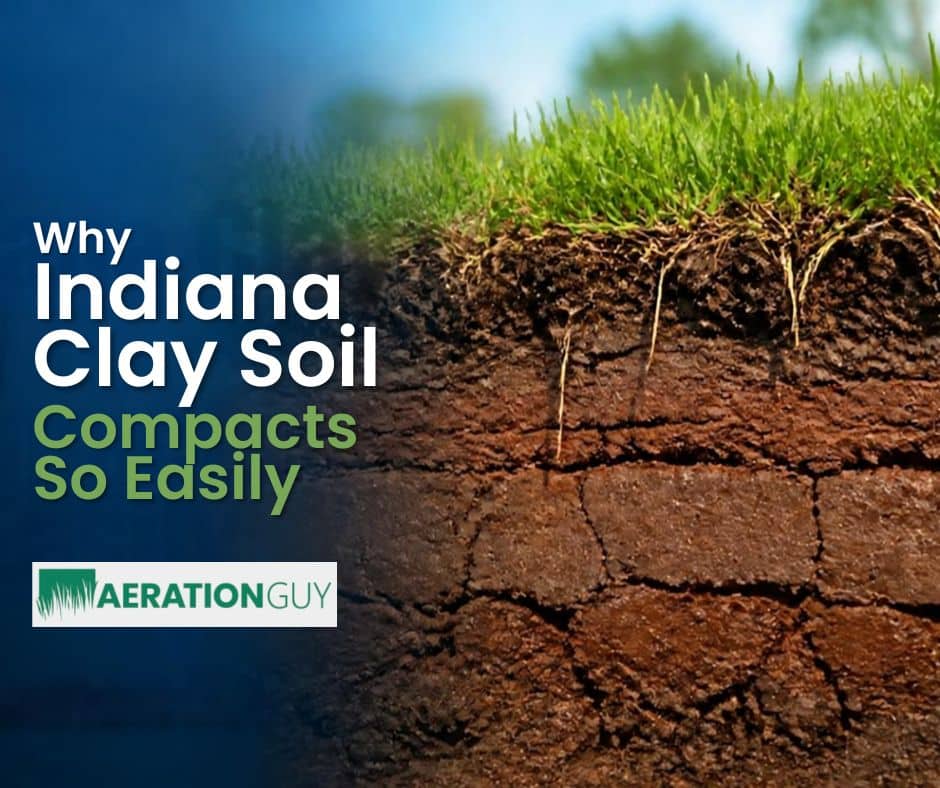
Does your lawn feel surprisingly hard when you walk across it? Indiana clay soil compaction happens because fine soil particles can pack tightly together, especially when the ground is wet and exposed to repeated foot, mower, pet, or equipment traffic. For Indianapolis homeowners, that compacted layer can make it harder for grass roots to access the air and water they need.
The problem is often underneath your lawn long before you notice changes in the grass.
At Aeration Guy, we focus on that underground problem. Understanding why your soil becomes compacted is the first step toward giving your turf a better environment for healthy root growth.
Why Indiana Clay Soil Compaction Happens
Clay soil behaves differently from sandy soil.
Purdue Extension describes high-clay soil as sticky and moldable when wet but very hard when dry. Clay soil can also drain slowly.
Those characteristics matter for Central Indiana lawns.
Soil isn’t supposed to be one solid mass. Healthy soil contains pore spaces that allow water and oxygen to move through the ground. Grass roots also use those spaces as they grow.
When pressure pushes soil particles closer together, some of those spaces disappear. Purdue Extension notes that compaction reduces pore space and creates a less favorable environment for healthy root development.
Wet Conditions Can Increase Indiana Clay Soil Compaction
Think about squeezing a handful of modeling clay.
Pressure changes its shape because the material can be compressed while it is soft. Wet clay-heavy soil can respond to pressure in a similar way.
That is why timing matters.
Purdue identifies traffic on wet soil as a major contributor to compaction and notes that poorly drained soils are particularly susceptible.
Everyday sources of pressure can include:
- Kids repeatedly playing in the same backyard areas
- Dogs running along fences or favorite paths
- Riding and push mowers
- Wheelbarrows and lawn equipment
- Heavy landscaping equipment
- Frequent walking between the patio and yard
- Vehicles driving across turf
One afternoon usually isn’t the entire problem. Repeated traffic can gradually create a denser root zone.
New Indianapolis Lawns Can Have Compaction From Day One
Sometimes homeowners didn’t create the compaction at all.
Construction can dramatically disturb a property’s original soil profile. During home construction, topsoil may be moved or buried while heavy machinery repeatedly travels across the property.
Purdue notes that many lawns are established on severely disturbed construction soils. Less productive subsoil can end up near the surface, and that subsoil is often high in clay and easily compacted.
That means a beautiful newer home can have a surprisingly difficult growing environment underneath its lawn.
Adding seed or fertilizer doesn’t physically loosen that compacted layer. The root-zone problem may remain.
What Indiana Clay Soil Compaction Does to Grass Roots
The biggest issue with compacted soil isn’t simply that the ground feels hard.
It’s what that hardness can do below the surface.
Dense soil can restrict rooting while limiting the movement of water and air. Purdue notes that aerification can improve water and air movement and increase rooting by relieving compaction.
A compacted lawn may show symptoms such as thin turf, shallow rooting, bare high-traffic areas, slow water absorption, or puddling after rain.
However, standing water doesn’t automatically mean compaction is the only issue. Poor grading and naturally low areas can also cause drainage problems.
How Can You Tell If Your Indianapolis Lawn Is Compacted?
You don’t need to wait until your lawn becomes severely thin.
Pay attention to how the ground behaves.
Try pushing a screwdriver into moist soil. If getting it several inches into the ground takes considerable effort, dense soil may be part of the problem. You can also inspect areas where people naturally walk. Grass beside patios, gates, sidewalks, play areas, and backyard paths often experiences more traffic than the rest of the lawn.
Another clue appears after rainfall.
If water frequently sits on the surface instead of soaking into the ground, dense or compacted soil may be contributing to poor infiltration. Purdue notes that compacted or dense soil can prevent water from being absorbed effectively.
How Core Aeration Addresses Indiana Clay Soil Compaction
This is where core aeration is different from simply poking holes into the ground.
A core aerator physically removes small columns of soil. Those openings relieve compaction and create pathways for air and water to move into the root zone.
Purdue recommends aerification that reaches approximately 2 to 3 inches deep and produces roughly 20 to 40 holes per square foot for effective results.
That’s also why the quality of an aeration job matters.
A few shallow holes across the lawn aren’t the same as thorough core aeration. Soil moisture, tine penetration, equipment, and the number of passes can all influence the resulting holes and soil cores.
Why Core Aeration Makes Sense for Central Indiana Lawns
Clay isn’t inherently “bad” soil. The challenge comes when its structure becomes dense enough to restrict the root environment.
Core aeration gives that soil some physical breathing room.
For cool-season grasses commonly grown in Indiana, Purdue recommends aerification while the turf is actively growing, typically in fall or spring.
For homeowners dealing with compacted ground year after year, aeration can become an important part of maintaining the lawn rather than a one-time rescue treatment.
Get Below the Surface With Aeration Guy
A lawn can look green on top while the soil underneath is working against it.
If your yard feels hard, absorbs water slowly, or struggles in heavily traveled areas, Indiana clay soil compaction could be part of the problem.
Aeration Guy specializes in getting below the surface. Our core aeration service helps relieve compacted soil and creates better conditions for air, water, and healthy root development.
Ready to give your lawn some breathing room? Contact Aeration Guy to schedule professional core aeration in Indianapolis or Central Indiana.